How we calculate this
For this product, about 4400 g of crop grew: the fruit in the juice, plus the tea and the sugar in the kombucha. Organic certification covers every agricultural ingredient, not just the fruit.
Conventional growing uses about 0.27 g of synthetic pesticide per kg. Organic growing uses none at all. 4,400 kg x 0.27 = 0,748 g of synthetic pesticide never used.
Estimate: this is an estimate. See 'Source' for the figures it rests on and why we deliberately stay conservative.
Source
Why we count only synthetic substances. Organic growing also uses crop protection — sulphur, copper — and more of it by weight. The difference is in which substances. From research comparing every substance approved in Europe: 55% of those allowed only in conventional farming carry a hazard pictogram, versus 3% of organic ones. 16% warn of harm to the unborn child, suspected carcinogenicity or acutely lethal effects — for organic, 0%. Those are exactly the substances this product avoids.
Comparison of substances approved in Europe: conventional vs organic (peer-reviewed)
What conventional growing uses. In the Netherlands in 2020, about 21 kg of pesticide per hectare went on apples. At a harvest of some 40 tonnes per hectare that is ~0.5 g per kg of fruit. Estimate: we count only half of that as synthetic (0.27 g/kg). Sulphur is used in both systems and is not synthetic, so we deliberately count low.
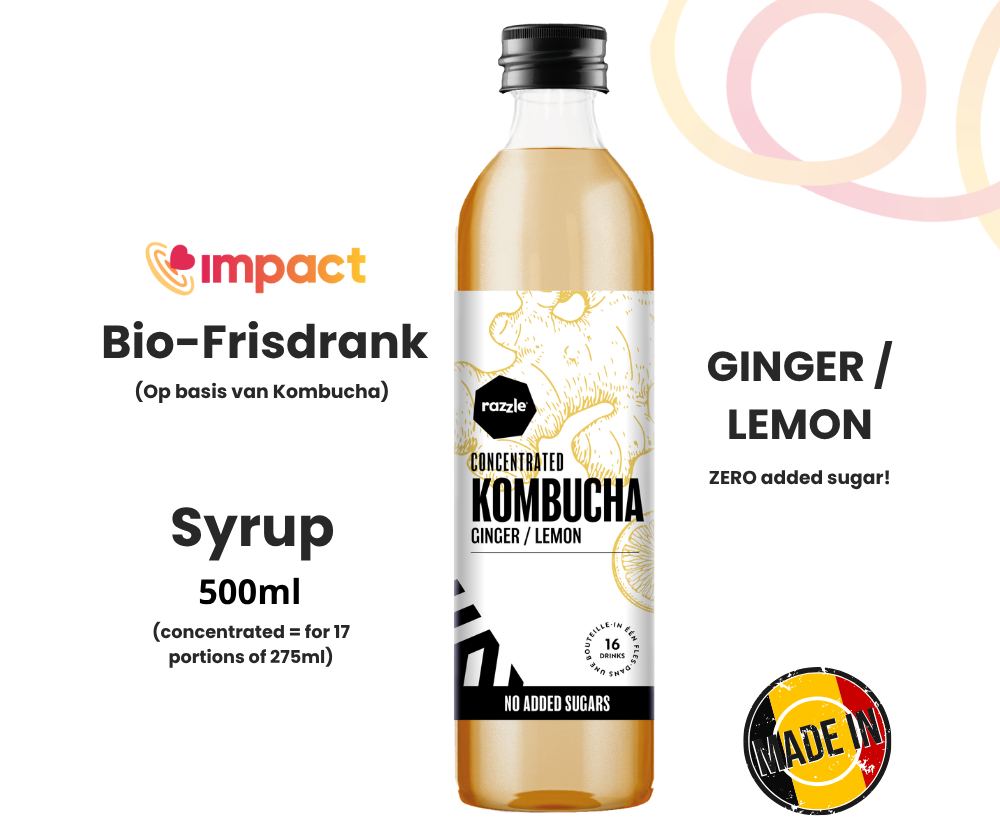
Which crop we count. The fruit in the juice, plus the tea and the sugar in the kombucha: organic certification covers every agricultural ingredient, not just the fruit. Estimate: for the bottles Razzle does not publish the kombucha share; we use the 17% it states for the concentrate, and the classic ratio 1 litre of water : 5 g of tea : 70 g of sugar (~10 kg of cane per kg of sugar). As soon as Naya Drinks confirms the recipe, we will adjust it.
Razzle ingredients and nutritional values · Concentrate ingredients
The organic label is not a promise but an inspection: European organic certification bans synthetic pesticides and is checked on site every year by an independent body.
Why this matters
A pesticide is designed to kill living things. It rarely acts only on the creature it was meant for. That is why Europe sets the drinking-water limit at 0.1 microgram per litre - half a sugar cube spread across fifty Olympic swimming pools.
But a limit does not yet say why it matters. This does: in areas of the Netherlands where the water held high concentrations of the pesticide imidacloprid, bird populations fell by 3.5% a year - measured in Nature. Not because birds drink it, but because their food disappears: the insects. Europe's own food safety authority EFSA called the same group of substances an unacceptable risk to bees.
Fewer insects means less pollination, fewer birds, and ultimately less of what ends up on our own plates. For this product, not one of those substances was used.
This comparison is only here to make the number tangible. It is an illustration, not hard science.
By choosing an IMPACT product you avoid all of this. That does society, today and tomorrow, an enormous service and makes a big positive difference to the future of us all.